

In this article
Where the tongue rests is one of the things that shape neck posture. Most adults have never thought about it, but tongue position has a measurable effect on how the head balances over the spine, how the airway sits, and whether breathing through the nose happens by default.
This guide covers what proper tongue posture is, why conscious practice on its own often plateaus, where the position actually lives in the body, and the device that retrains it.
What proper tongue posture is
Proper tongue posture means the tongue sits wide against the roof of the mouth, lips closed, teeth lightly touching, and air flows through the nose at rest.
This is the position the body is structured to hold. When the tongue is here, the lower jaw is supported from underneath, the head balances naturally over the cervical spine, and the airway stays open.
Chronic mouth breathing has documented structural consequences. A 2015 systematic review in the Brazilian Journal of Otorhinolaryngology identified high-arched palate, dental malocclusion, orofacial muscle flaccidity, and dysphonia among the adaptations that follow when the tongue does not sit against the upper palate.

Why mewing helps, but does not last
The trend known as mewing is the practice of consciously holding the tongue against the upper palate throughout the day.
It works. People who practice consistently feel a more stable jaw, better lip seal, and less mouth breathing during the periods they are paying attention to it.
The catch is that conscious tongue posture only holds while the user is paying attention to it. The moment attention shifts, the tongue drops back to its default position. Most adults can hold the correct position for a few minutes at a time, not for a few hours.
This is not a discipline issue. The brain holds a default tongue position based on years of stored pattern. Willpower overrides that default temporarily. It does not rewrite the default through short conscious effort alone.

Where tongue posture actually lives
Tongue position is held below conscious attention. The brain manages it the same way it manages breathing rate, heart rhythm, and most posture: through stored pattern.
That stored pattern is what the body returns to during the hours you are not consciously thinking about it. It does not change from a few minutes of conscious holding per day.
This is why conscious mewing for months without a structural tool often plateaus. The conscious work is real, but the brain's default keeps getting reloaded between sessions.
How tongue position shapes neck posture
Where the tongue rests determines how the lower jaw sits. The lower jaw position influences how the head balances over the cervical spine. When the tongue is low or forward, the lower jaw drops back, the head juts forward to keep the airway open, and the neck muscles work to hold the head against gravity.
A clinical study of 605 children published in BMC Pediatrics found postural, occlusal, and ocular alterations clinically associated, with malocclusion incidence of 83 to 87 percent in orthopedic patients. Separate research measured a correlation of 0.63 between craniovertebral angle and forced vital capacity, meaning where the head sits has a measurable effect on lung function downstream.
The chain runs from tongue to jaw to neck to head. Correct tongue posture sits upstream of correct neck posture.

Quick self-checks
These take ten seconds and reveal where the work is.
- Where is your tongue right now? Without moving anything, notice where your tongue is sitting. If it is on the floor of the mouth or pressing against your teeth, that is your default. If it is wide against the upper palate, you are holding the position the body is designed for.
- Are your lips closed? At rest, the lips should seal naturally. If they part on their own, the tongue is not supporting the jaw from underneath.
- Are you breathing through your nose? Take a slow breath. If air enters and exits through the mouth, the tongue is not in the correct position.

Common mistakes
Most adults trying to correct tongue posture run into the same set of issues.
- Pressing too hard. Tongue posture is wide, gentle palatal contact. Pressing intensely can cause TMJ symptoms it was meant to prevent.
- Only the tip touches. The whole tongue should be in contact with the palate, not just the tip.
- Ignoring nasal breathing. If the nose is congested or the airway is restricted, the tongue cannot stay sealed against the palate. Address the airway first.
- Quitting too early. Sensory patterns take weeks to consolidate. Most measurable change happens after consistent practice over several weeks, not in the first days.
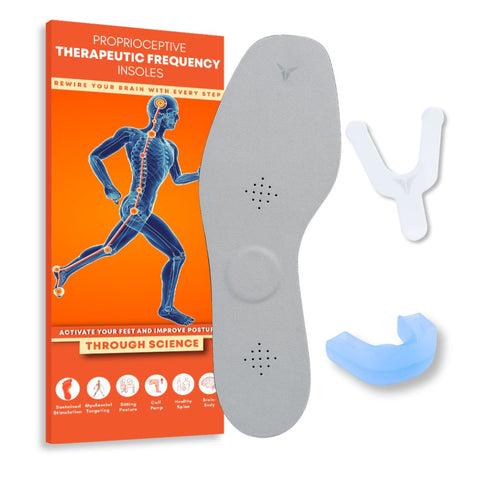
The Functional Activator
Where the tongue rests is one of the things that shape neck posture. The Functional Activator retrains tongue position, which changes how the head balances over the spine.
Free Shipping
When the user wears it, the tongue and jaw actively work to hold the correct position. The brain registers that position over repeated sessions.
Frequently asked questions
Why does conscious mewing plateau for most adults?
The brain holds a default tongue position from years of stored pattern. Conscious holding overrides the default during the minutes the user is paying attention. The default reloads the moment attention shifts, which is most of the day.
Is the Functional Activator the same as a mouthguard?
No. A standard mouthguard protects teeth from grinding. The Functional Activator retrains tongue position and engages the jaw mechanically when worn, training the brain's default position over repeated sessions.
How long should I use the Functional Activator?
Used consistently, the device retrains the tongue's resting position over time. The pattern shifts through repeated exposure, not on a fixed clock.
References
- Ribeiro, G. C. A., et al. (2015). Influence of the breathing pattern on the learning process: a systematic review of literature. Brazilian Journal of Otorhinolaryngology. doi:10.1016/j.bjorl.2015.08.026
- Silvestrini-Biavati, A., et al. (2013). Clinical association between teeth malocclusions, wrong posture and ocular convergence disorders: an epidemiological investigation on primary school children. BMC Pediatrics, 13(12). doi:10.1186/1471-2431-13-12
- Han, J., et al. (2016). Effects of forward head posture on forced vital capacity and respiratory muscles activity. Journal of Physical Therapy Science, 28(1). PMID: 26957743
- Hwang, Y. I., et al. (2018). Correlation between pulmonary functions and respiratory muscle activity in patients with forward head posture. Journal of Physical Therapy Science, 30(1). PMID: 29410583
- Arshamian, A., Iravani, B., Majid, A., & Lundström, J. N. (2018). Respiration modulates olfactory memory consolidation in humans. Journal of Neuroscience, 38(48), 10286-10294. doi:10.1523/JNEUROSCI.3360-17.2018