


Therapeutic Insoles
The Missing Foundation Every Treatment Overlooked
When foot positioning is off, your body compensates, often in your back, hips, and neck. These insoles change how your feet meet the ground. Many people notice the tension they've carried for years starts to ease.
How Do They Work

Every time you take a single step, over 200,000 sensory receptors in your feet come alive.

These receptors instantly send signals to your brain, delivering real-time feedback about pressure, movement, and balance.

Your brain uses that data to adjust your entire body to keep you upright and stable.
Therapeutic Insoles vs Traditional Orthotics
Traditional orthotics are designed to support and modify foot structure. Our insoles are designed to create a consistent, textured surface experience inside your shoe. They serve different purposes—orthotics change structure, these change the feel.
| Category | Our Insoles | Traditional Orthotics |
|---|---|---|
| Purpose | Provides consistent surface feel | Support the arch |
| Design Approach | Thin and flexible | Firm and hard |
| What It Does | Makes shoes feel more stable | Modifies foot positioning |
| Experience | Grounded | Supported |
| Thickness | 3mm thin profile | Typically 8-15mm thick |
| Flexibility | Moves with your foot | Rigid structure |
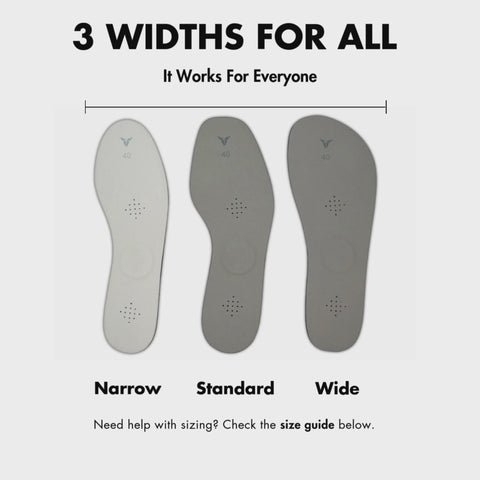
| Fit | Works in minimal/barefoot shoes | Requires roomier footwear |
| Dependence | None | Weaken muscles of the feet |
| Daily Use | Works when standing or sitting | Works only when standing |
| Price Point | $400 | $300-800+ |
Posturepro Insoles vs Traditional Orthotics
If you're looking for support, orthotics are designed for that purpose. If you want a firm, stable feel inside your shoe—our insoles offer that experience without the bulk or rigidity of traditional orthotics.
THERAPEUTIC INSOLES Frequently Asked Questions
Your feet send 200,000 signals per day to your brain about gravity and balance. When those signals are wrong, your brain compensates by tightening muscles in your back, neck, and shoulders to keep you upright. Fix the signals at the source—compensation stops automatically.
Orthotics support your arch. These change the sensory signals your feet send to your brain. Orthotics modify structure. These modify communication. Different purpose, different result.
Most people feel changes within 3-7 days. Some notice immediately. Your brain stops compensating as soon as it receives clear signals—tension releases naturally, not gradually.
Yes. They're 3mm thin and flexible. Work in sneakers, dress shoes, boots—anything except flip-flops or very narrow heels. You wear them like insoles, but they work like a reset button.
That's actually proof this will work. Multiple pain points mean your body is compensating in a chain reaction. When you fix the foundation (feet), the entire chain releases—not just one area.
Therapeutic Insoles