

How to Fix Rounded Shoulders (When Exercises Don't Work)
You've stretched. You've strengthened. Your shoulders still roll forward. Here's what no one is telling you—and the test that reveals where the problem actually starts.

Shoulder position before and after neurological pattern correction. No shoulder exercises were involved.
How to Know If Your Shoulders Are Rounded
Stand sideways in front of a mirror. Let your arms hang naturally. Look at your shoulder position.
Can you see your upper back behind your shoulder? Does your shoulder sit in front of your ear?

That forward position isn't random. It's your brain actively holding your shoulders there.
Three additional signs of rounded shoulders:
- Your palms face backward when standing relaxed
- Your chest feels tight even after stretching
- Your upper back rounds forward when you're not thinking about posture
Most people assume the chest is tight and needs to be stretched. That's backwards.
The rounded shoulder is the compensation. The problem is what's pulling it forward.

This is why stretching the chest and strengthening the back creates temporary relief at best. You're addressing the output. The input driving it remains unchanged.
Why Every Exercise Has Failed Until Now
You've done the exercises. Chest stretches. Rows. Scapular retractions. Maybe you've even seen a physical therapist who gave you a detailed corrective program.
The shoulders pull back for a few hours. Then they drift forward to the same rounded position.
This is not a muscle problem. This is physics.
The shoulders are following the head. If you want the shoulders to stop rounding, you need to address why the head is forward. And if you want to address why the head is forward, you need to go one step further upstream.
It's a pattern problem.
Shoulder position is controlled by the brain. But the brain doesn't position shoulders in isolation. It positions them relative to your head. And your head position is determined by signals from three sensory systems that anchor your orientation to gravity.
When your head drifts forward, your shoulders must round to counterbalance. The brain calculates this automatically. No amount of conscious effort overrides it permanently.
Your brain rounds your shoulders because your head is forward. Your head is forward because of distorted sensory input. The shoulders are doing exactly what they're supposed to do—they're compensating for a position your brain calculated was necessary.
This is why two people can sit at a desk for the same number of hours and only one develops rounded shoulders. The desk isn't the variable. The signals each brain is processing are.
When you stretch or strengthen the shoulders without changing the head position—and the signals that created that head position—the brain restores the original pattern the moment you stop thinking about it. Not because the muscles are weak. Because the pattern is unchanged.
Most people discover that when they push their head back, the shoulders open immediately—without any effort. That automatic opening is evidence: the shoulder position is a compensation for head position.
This test addresses the diagnostic step. The correction requires a different sequence entirely.
Why This Test Isn't a Solution
The wall test reveals that your shoulders are downstream of your head position. That's valuable. But knowing the relationship is not the same as fixing it.
Forward head posture is driven by distorted signals arriving at the brainstem from three sensory systems that determine how the brain positions the head relative to gravity. When even one sends unclear input, the brainstem shifts the head forward, rounds the shoulders, and curves the spine accordingly.
These systems are testable. They're correctable. And when they're addressed in the right sequence, head position shifts back and shoulders open in the same session—without stretching, strengthening, or reminders to "pull your shoulders back."
The correction sequence is different depending on which pattern you have.
- If visual input is distorted → Head shifts forward to stabilize gaze
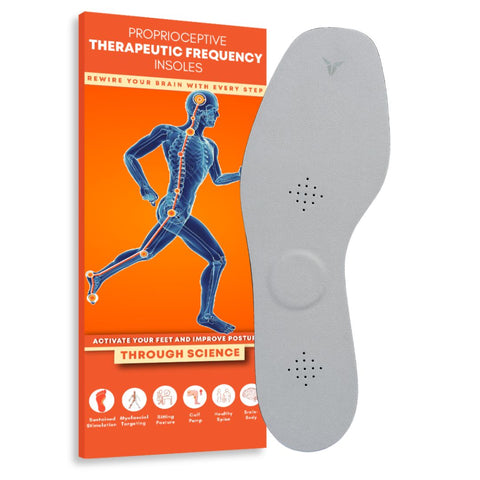
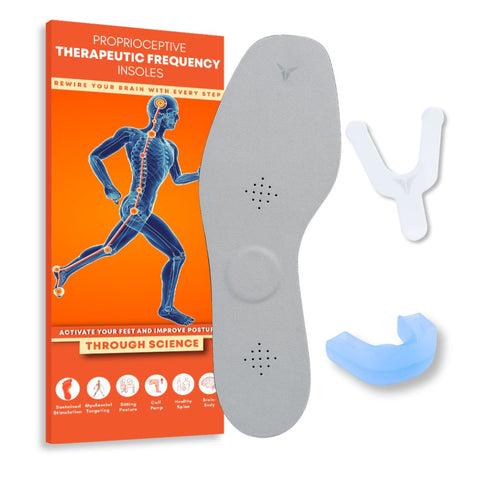
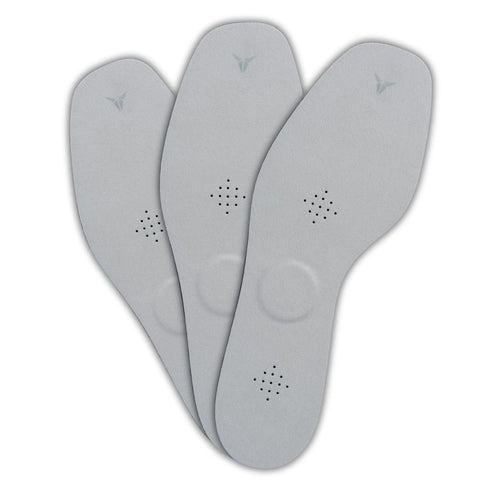
- If foot pressure is asymmetric → Head compensates for the tilt below
- If jaw alignment is off → Head rotates and the neck locks forward
Doing the wrong correction for your pattern? You strengthen the compensation instead of resolving the source.
The 5-Minute Posture Fix was built for exactly this. It walks through the diagnostic test that identifies YOUR specific pattern, then provides the correction sequence that interrupts the neurological loop driving the forward head posture. Five minutes. No equipment. The brain recalculates head position—and shoulders follow—because the signals changed.
If your shoulders keep rounding forward no matter what you do—the signals haven't changed yet.
The five most common mistakes adults make trying to fix rounded shoulders
Rounded shoulders are one of the most-treated and least-resolved postural patterns. Most adults run into the same mistakes.
- Stretching the chest only. Tight pecs are a consequence, not a cause. Stretching them produces an hour of relief and zero structural change.
- Strengthening the upper back in isolation. Rows and band pull-aparts strengthen muscle without changing the underlying postural signal. The pattern returns within hours.
- Working only on the visible problem. Rounded shoulders rarely exist alone. They are usually the upper expression of a chain that runs from the feet to the jaw.
- Foam-rolling the thoracic spine daily. Helps mobility temporarily. Does not change why the spine flexed forward in the first place.
- Ignoring the breath. Rounded shoulders almost always coincide with shallow chest breathing. Until the diaphragm drops, the shoulders cannot fully release.
Reset the Pattern That's Pulling You Forward
The 5-Minute Posture Fix identifies which sensory system is driving YOUR forward head posture, then provides your exact correction sequence. When the input clears, head shifts back and shoulders open—without exercises.
Fix My Posture BundleInstant digital access · Works in the first session · $97
Watch: Why Your Shoulders Stay Rounded
Frequently Asked Questions
Why do my shoulders stay rounded no matter what I do?
Because rounded shoulders are downstream of forward head posture. The brain positions your head forward first, then your shoulders round to counterbalance. Until the head position changes, the shoulders follow. Until the signals driving head position change, nothing changes permanently.
Can chest stretches and back exercises fix rounded shoulders permanently?
Chest stretches and back exercises address the muscles executing the movement. They do not change the neurological pattern driving forward head posture. Without addressing the sensory input that created the compensation, the shoulders return to their rounded position.
Is sitting at a desk what caused my rounded shoulders?
Sitting at a desk reinforces the pattern but rarely creates it. Two people can sit at the same desk for years, and only one develops rounded shoulders. The variable isn't the desk—it's the sensory signals each brain is processing.
How long does it take to fix rounded shoulders?
When the underlying sensory pattern is addressed, head position can shift within the first session—and shoulders follow immediately. The brain repositions the head once it receives corrected input. Structural remodeling of fascia and connective tissue typically takes 6–8 weeks to consolidate.
What are the three sensory systems that control head position?
The brain determines head position based on signals from three systems that anchor your orientation to gravity. Each controls a different dimension of balance. When even one sends distorted input, the brainstem shifts the head forward—and shoulders round to compensate. The 5-Minute Posture Fix identifies and resets all three.
Should I strengthen my upper back to fix rounded shoulders?
Strengthening the upper back without correcting head position can make the pattern worse. The back muscles aren't weak—they're neurologically inhibited. The brain has reduced tone there because it's allowing the rounding to counterbalance the forward head. Forcing them to strengthen without correcting the pattern reinforces the compensation.
References
- Singla, D., & Veqar, Z. (2017). Association between forward head, rounded shoulders, and increased thoracic kyphosis: A review of the literature. Journal of Chiropractic Medicine, 16(3), 220–229.
- Yip, C. H., Chiu, T. T., & Poon, A. T. (2008). The relationship between head posture and severity and disability of patients with neck pain. Manual Therapy, 13(2), 148–154.
- Kavounoudias, A., Roll, R., & Roll, J. P. (2001). Foot sole and ankle muscle inputs contribute jointly to human erect posture regulation. The Journal of Physiology, 532(3), 869–878.
- Day, B. L., Steiger, M. J., Thompson, P. D., & Marsden, C. D. (1993). Effect of vision and stance width on human body motion when standing. The Journal of Physiology, 469(1), 479–499.
- Gonzalez, H. E., & Manns, A. (1996). Forward head posture: Its structural and functional influence on the stomatognathic system. CRANIO, 14(1), 71–80.